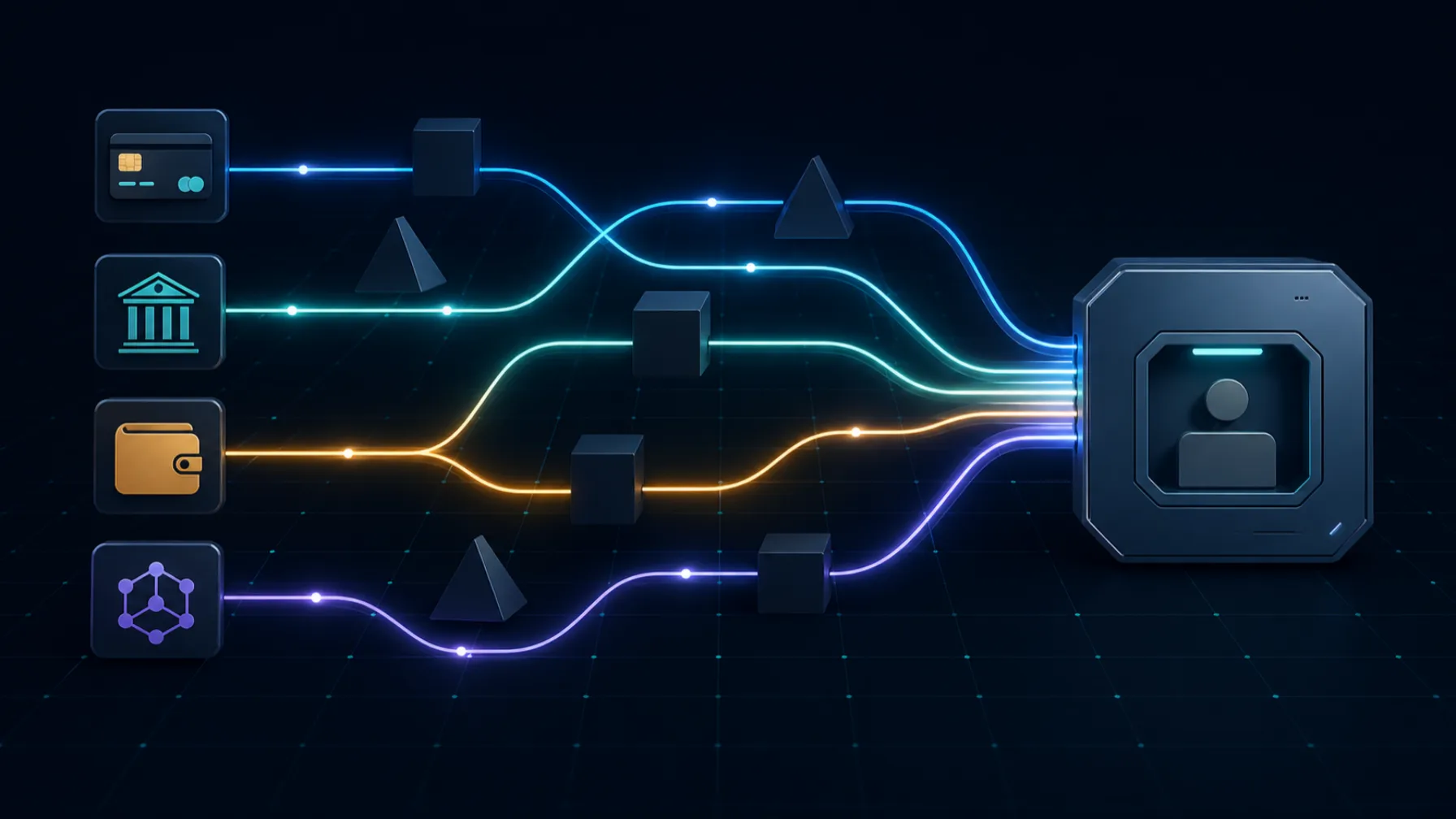
Build a Multi Rail Funding Plan for Offshore Books
No single rail is reliable end to end for offshore betting; redundancy across two or three rails is the only durable plan.
Crypto first stacks dominate on speed and cost; fiat rails remain useful for retention, off ramping winnings, and as a backup when crypto is inconvenient.
Card decline rates have risen since 2022 because of card scheme rule changes, not because of any individual operator’s acquiring failures.
Withdrawal cadence is the single best operational read on an operator; if rail times degrade, the rest follows.
The cheapest rail to deposit is rarely the same as the cheapest rail to withdraw; plan both directions before depositing.
A funding plan, not a single rail. Redundancy is the only thing that survives bank policy drift.
Why funding is the operational core of offshore betting
Pricing matters, market depth matters, payout reliability matters, but none of those criteria gets exercised if the funding rail itself does not work. The operational truth of offshore betting in 2026 is that funding is non trivial, that the friction is structural rather than incidental, and that a serious bettor builds a plan covering at least two rails before any real bankroll touches the operator. This page is the rail by rail walkthrough; pair it with the crypto page for the dominant default rail and with the privacy and KYC page for the identity layer that touches every rail above tier one.
The inventory below covers seven rails: cards, wires, e-wallets, prepaid instruments, peer to peer voucher networks, courier checks, and crypto. Each gets the same four read out: cost, speed, success rate, and anonymity at the player level. The order roughly tracks how the market evolved; the practical funding plan, presented at the end, inverts that order and starts from crypto.
The chart below sets the operational baseline. These are realistic windows on a healthy operator with no flag on the account; problem operators or flagged accounts add hours or days at every step. The data table is the source of truth and screen reader visible by default.
Withdrawal time benchmarks by rail (typical, hours)
Label
Best case (h)
Typical (h)
Worst case before red flag (h)
Crypto fast L2/L1
0.1
1
12
Crypto BTC L1
1
6
24
E-wallet
24
48
96
Wire transfer
72
120
168
Card refund (rare)
48
96
240
Courier check
168
240
336
Hours to funds received on a healthy operator, no flag. Material deviation above the worst case column is the signal to abort the rail.
The structural reads from the chart. Crypto on a fast chain is two orders of magnitude faster than the fastest fiat rail, and that gap is structural rather than operator dependent. Courier checks are the slowest rail, retained mainly for high value withdrawals where neither crypto nor wires fit a specific player’s situation. The "worst case before red flag" column is the operational threshold; an operator drifting beyond those numbers is signalling a slow pay spiral, the early stage of which is treated in detail on the safety page.
Rail one: cards, decline mechanics, and what changed in 2022
The card rail used to dominate offshore deposits. Today it is the highest friction inbound rail and a near zero outbound rail. The cause is layered. Card schemes (the global associations behind the major card brands) tightened rules around gambling related transactions in successive updates. Issuing banks added their own block lists that flag transactions tagged with the gambling Merchant Category Code (commonly MCC 7995) when the acquiring bank is associated with offshore operators. Specific issuing banks differ in aggressiveness; some block almost universally, others let through transactions on a permissive default. The aggregate effect across all issuing banks is that card success rate fell from a working majority in the late 2010s to roughly half in 2026.
Operationally, what this means for the player. A first card decline is normal and tells you nothing definitive; a second decline on a different card is the signal that the rail is not viable for your specific issuing bank against this specific operator’s acquiring bank. Do not retry repeatedly; each decline is a flag on your card record and several declines in sequence trigger a fraud review at your issuing bank that can lock the card for non gambling activity too. Switch rails after two declines.
Card success rate is also bidirectional. Some operators successfully push refunds back to the original card on small balances; almost none process meaningful winnings as card refunds. Treat the card rail as inbound only and plan a different outbound rail before depositing.
Rail two: wires, the high amount workhorse
International wire transfer remains the most reliable high amount rail, in both directions, for fiat first offshore activity. The trade offs are well documented: three to seven business days for outbound, similar for inbound, fees in the twenty to fifty USD range per transaction at typical retail banks (lower at private banks and at certain digital banks). The wire travels through the SWIFT network, which means every correspondent bank in the chain has visibility of the transaction; the metadata (sender, recipient, amount, sometimes purpose code) is fully visible to the player’s home bank.
What banks see and what they do with what they see are different questions. A foreign incoming wire from an offshore operator is normal banking activity for any retail customer with international exposure; the bank does not block by default unless the recipient or the sending bank is on a specific block list. Anti money laundering reporting may apply on amounts over a per jurisdiction threshold (commonly ten thousand or equivalent for inbound foreign transfers), and the report is automatic, internal, and almost always uneventful. The classic mistake is assuming a wire creates a criminal exposure; the more accurate model is that a wire creates a normal record that is transparent to your bank and your tax authority, and that record is fine if the underlying activity is something you can explain.
Outbound wires from operators carry their own friction. The operator typically requires a verified bank account name match; mismatches between the player’s account and the verified name on file cause manual review and delay. Some banks reject inbound wires from specific offshore correspondent banks; if the wire is rejected at the recipient end, the funds bounce back to the operator (ten to twenty days round trip), and the operator has to send through a different correspondent. This is the slowest failure mode on the wire rail and worth checking against operator history before committing to a wire withdrawal of size.
Worked example one: a 2,500 fiat withdrawal across rails
Take a 2,500 USD withdrawal request from a healthy operator, processed on the same day, four candidate rails. Numbers approximate the typical case in 2026; specific operators and banks vary.
Rail
Typical operator fee
Bank or network fee
Time to funds
Net to player
Crypto USDT (Tron, Solana, L2)
0 to 5 USDT
under 1 USDT on chain; 0 to 0.5 percent on off ramp
under 4 hours operator to wallet; same day to fiat
≈ 2,485 USD
Wire transfer
25 to 50 USD
15 to 30 USD recipient bank fee
3 to 7 business days
≈ 2,420 to 2,460 USD
E-wallet
0 to 25 USD
0 to 1.5 percent on fiat off ramp from the wallet
1 to 3 days plus off ramp time
≈ 2,440 to 2,490 USD
Courier check
50 to 100 USD
0 (depositing the check) to small holdback
7 to 14 days
≈ 2,400 to 2,450 USD
The crypto rail wins on every column: lowest absolute cost, fastest time, fewest counterparties. The wire rail is a strong second when the player wants funds directly into a fiat bank account without an exchange off ramp. The e-wallet rail trades speed for an extra hop. The courier rail is slowest and most expensive and is retained only for the rare case where every other rail is unavailable to a specific player.
Rails three through six: e-wallets, prepaid, P2P, courier
The middle rails fill specific gaps and are useful as part of a multi rail plan even if none of them is the primary rail.
E-wallets. Specialised gambling friendly e-wallets retained operator integrations through the wider tightening; mainstream e-wallets either left the gambling space or restricted by region. The viable ones in 2026 include several brands focused specifically on player retention. The use case is bidirectional fiat with one to three day settlement and operator side fee competitive with crypto. The friction is on the wallet to bank off ramp on the player side; budget 0.5 to 1.5 percent on the off ramp depending on wallet and country.
Prepaid cards and vouchers. Inbound only, useful as a card decline workaround. The instrument looks like a card transaction to the operator and like a cash purchase to the seller. Caps are usually small (two hundred to one thousand per voucher) and load fees run three to seven percent. Acceptable for a recreational deposit cycle, expensive for a serious bankroll.
P2P cashier and voucher networks. Operator partnered third party networks that match player to player or player to in country agent. The transaction settles in the local currency through a domestic bank transfer or cash deposit; the network credits the operator account. The model bypasses bank rail blocks entirely because the bank only sees a domestic transfer. Counterparty risk lives in the network, not the operator; use only operator listed P2P partners and never an off list deal. Where it works (specific markets and operators), the rail is fast and cheap; where it does not, do not improvise.
Courier check. The legacy high amount rail. The operator prints a paper check, ships it via international courier, and the player deposits it at their home bank. Cost is fifty to one hundred USD shipping plus issuing bank holdback. Time is seven to fourteen days. Use case in 2026 is essentially "no other rail works for this withdrawal amount and this player situation"; outside that narrow case, the rail is a relic.
Rail seven: crypto as the practical default
Crypto deserves its own treatment, and it has it on the dedicated crypto offshore betting page. The summary read for the funding plan: stablecoin (USDT or USDC) on a fast chain (Tron, Solana, an Ethereum L2) is the default rail for both directions on a healthy crypto first operator. Settlement is minutes to hours, fees are pennies to a few USDT, and the only counterparty risk is the operator itself plus the chain. Where the operator does not credit on chain confirmation in normal time, the same fifty dollar stress test from the evaluation framework tells you whether the issue is the rail or the operator.
The honest constraint on crypto rails is the off ramp. Converting USDT or USDC to fiat in the player’s home currency requires either a regulated exchange (which adds a KYC layer and a 0.1 to 0.5 percent spread) or a P2P market (cheaper but with counterparty risk and operational overhead). For most players the regulated exchange off ramp is the right answer; the spread is small, the surface area is well understood, and the per cycle cost amortises across a healthy bankroll.
Worked example two: the redundant funding plan in numbers
Build a funding plan for a 10,000 starting bankroll with a target of one cycle every two weeks across two operators. Three rail components, used in priority order.
Primary, crypto stablecoin on a fast chain. Default deposit and withdrawal route on both operators. Per cycle cost: under 5 USDT round trip on the chain, plus 0.1 to 0.3 percent on the fiat off ramp at the regulated exchange. Annualised cost on 100,000 of cycle volume: roughly 100 to 300 USD. Speed: same day operator to bank account.
Secondary, e-wallet. Backup rail for both operators if the crypto rail breaks at either operator. Per cycle cost if used: 25 USD operator fee plus roughly 1 percent off ramp. Annualised cost if exercised on 20 percent of cycles: roughly 200 to 250 USD. Speed: one to three days operator to bank.
Tertiary, wire. High amount fallback. Used only on annual withdrawals over 5,000 if both above are unavailable. Per use cost: 40 to 80 USD. Speed: three to seven business days.
Annual rail cost on the redundant plan, assuming 80 percent crypto, 18 percent e-wallet, 2 percent wire: somewhere between 250 and 500 USD on 100,000 of cycle volume. Annual rail cost on a card only plan, assuming the cards work and not all transactions decline: 1.5 to 3 percent on deposit, similar on rare withdrawal refund or alternative wire withdrawal, totaling 2,000 to 4,000 USD over the same volume. The redundant crypto first plan is cheaper by an order of magnitude and faster on every cycle. That is the operational case rendered in dollars.
The rare tactic: rail by event mapping
Most bettors pick a rail per operator and stick with it. The slightly more advanced habit is to pick a rail per transaction type rather than per operator, and to switch consciously based on what each transaction needs. The main events where the choice matters: the first deposit on a new operator, the first withdrawal of any size, the post big win withdrawal, and the cyclical maintenance withdrawal at month end.
First deposit on a new operator. Use the smallest viable rail at the smallest viable amount. Crypto stablecoin at fifty USD is the canonical version; the goal is to get an account active and settle a real transaction without exposing real bankroll. This is the deposit half of the fifty dollar stress test from the evaluation framework.
First withdrawal. Use the same rail as the deposit, at the smallest cashable amount the operator accepts. The match between deposit and withdrawal rail is what KYC processes look for; mismatched rails are a flag that introduces friction. Smallest amount means the test is cheap if it fails.
Post big win withdrawal. This is the request that most often triggers a KYC upgrade. Use a rail you have previously withdrawn on successfully at smaller size; the operator’s history with you on that specific rail is part of the file when KYC ramps up. Avoid switching rails or chains for the big withdrawal; introduce friction only where the rail itself forces it.
Cyclical maintenance. The default crypto rail at the operator’s lowest withdrawal fee. Rebuild bankroll velocity, run the off ramp at the regulated exchange, repeat.
The rail by event approach turns a rail choice into a per situation decision rather than a one time setup, and it is the closest thing to a robust funding habit on offshore stacks.
Pitfalls: the rail level traps that catch otherwise careful players
Treating the deposit rail as the only rail. The most common mistake is funding a new operator with whatever rail works at sign up and only thinking about withdrawal months later when there is a meaningful balance to extract. Plan the withdrawal rail before depositing; the operator’s cashier table tells you what is supported in both directions before you commit any funds.
Repeated card retries. Every retry is a separate decline event recorded at the issuing bank. Three or four declines in sequence will trigger a card lock that affects non gambling activity. Two declines means the rail is not viable; switch rails immediately rather than escalating to manual review with the bank.
Mismatched name on wire. Wires require an exact name match between the player’s verified profile and the receiving bank account. Maiden names, middle names, transliterations from non Latin scripts, and joint accounts all create mismatch friction. Before requesting a wire withdrawal, confirm the name on file at the operator matches the recipient bank account name to the letter.
Off list P2P cashier deals. Forum or chat introductions to "fast cheap deposits" outside the operator’s listed P2P partners are a counterparty risk magnifier. The operator credits only verified payments from listed partners; an off list payment can be lost in full with no recourse. The rule is simple: if the partner is not on the operator’s cashier page, do not use it.
Voucher hoarding. Prepaid voucher inventory has a shelf life and reload fees; buying ahead of need is a wasted spend. Buy vouchers per cycle, not per quarter.
Single rail single operator. The most common failure mode at the bankroll level is putting all activity through one operator on one rail; when that operator’s rail breaks, the entire bankroll is stuck. Two operators, two rails, is the minimum redundancy. The cost is a small amount of administrative overhead; the benefit is bankroll continuity through any single point failure.
Frequently asked questions
Why does my card keep getting declined on offshore deposits?
Two layers of decline. The card scheme rule (Visa and Mastercard tightened gambling related transaction rules from the early 2020s onward) and the issuing bank’s own block list. The decline is automatic and silent; the bank does not investigate, it simply rejects the merchant category code or the operator’s acquiring bank. Workarounds are well documented (alternate cards, prepaid instruments, e-wallets), and at this point most serious offshore activity has migrated to crypto rails for exactly this reason. The detail is on the crypto page.
What is the fastest way to withdraw winnings?
Crypto rails on a fast chain. A clean operator pays USDT on Tron, Solana or an Ethereum L2 in minutes to a couple of hours. Wire transfers run three to seven business days, courier checks run seven to fourteen, and e-wallets sit somewhere in the middle at one to three days. There is no fiat rail that beats a crypto first cashier on speed; the gap is structural rather than situational.
Are e-wallets still usable for offshore betting?
Yes for some operator and e-wallet combinations, no for others. The major e-wallets restricted gambling related accounts unevenly across regions; specialised operator focused wallets retained gambling support. Read the operator’s cashier list and confirm both directions are open before committing the rail. E-wallets are useful as a backup rail rather than a primary; the days of e-wallets as a default offshore funding rail ended several years ago.
Will my bank flag a wire from an offshore operator?
The bank will see a foreign incoming wire from an entity it can name. Whether that is "flagged" depends on the bank’s internal anti money laundering thresholds, the wire amount, and your existing pattern of foreign transfers. For routine recreational amounts the wire is normal banking activity; for larger or repeating wires the bank may file a Suspicious Activity Report internally, which is a surveillance signal rather than a charge. Keep records of the underlying activity so any inquiry can be answered cleanly.
Should I use a prepaid card to deposit?
Useful as a backup rail when the main card is declined and crypto is not viable. Prepaid instruments work because they look like card transactions to the merchant and like cash purchases to the issuing party. The trade offs are real: load fees, deposit caps that are usually small, and one way functionality (deposits work, withdrawals to the prepaid instrument generally do not). Pair a prepaid deposit with a wire or crypto withdrawal path.
How do P2P cashier and voucher rails work?
The operator outsources the player side payment to a third party network. The player buys a voucher or transfers to a peer through a marketplace; the third party credits the operator account. The model bypasses bank rail blocks entirely but introduces counterparty risk in the third party network. Use only operator listed P2P partners; never accept a P2P deal from a forum or chat introduction.
We use necessary cookies to make this site work. We would also like to set optional analytics cookies to understand how visitors use the site. You can change your choice at any time from the footer.